The Met's "Musical Bodies" Exhibition Reveals That Every Instrument Begins With Us
The violin serves as perhaps the most recognizable example. Visitors learn that even the instrument's terminology borrows directly from anatomy, with its neck, waist, belly, and back forming an anthropomorphic body. More than clever naming, these features make the instrument easier to hold, shape the way it is played, and encourage musicians to interact with it almost as though it were another living being.
This concept extends far beyond orchestral instruments. Throughout the galleries, visitors encounter centuries of designs inspired by heads, limbs, torsos, internal organs, and even bodily systems, demonstrating that the human form has long served as a template for musical innovation.
Yet Musical Bodies goes far beyond physical design.
One of the exhibition's greatest strengths is its willingness to explore the cultural meanings attached to instruments. Throughout history, musical instruments have represented beauty, identity, spirituality, and even mortality.
The exhibit doesn't shy away from these topics. A Renaissance lute's teardrop-shaped body was associated with femininity and nourishment, while its sound hole carried symbolic comparisons to female anatomy.

The violin serves as perhaps the most recognizable example. Visitors learn that even the instrument's terminology borrows directly from anatomy, with its neck, waist, belly, and back forming an anthropomorphic body. More than clever naming, these features make the instrument easier to hold, shape the way it is played, and encourage musicians to interact with it almost as though it were another living being.
This concept extends far beyond orchestral instruments. Throughout the galleries, visitors encounter centuries of designs inspired by heads, limbs, torsos, internal organs, and even bodily systems, demonstrating that the human form has long served as a template for musical innovation.
Yet Musical Bodies goes far beyond physical design.
One of the exhibition's greatest strengths is its willingness to explore the cultural meanings attached to instruments. Throughout history, musical instruments have represented beauty, identity, spirituality, and even mortality.
The exhibit doesn't shy away from these topics. A Renaissance lute's teardrop-shaped body was associated with femininity and nourishment, while its sound hole carried symbolic comparisons to female anatomy.

The exhibit continually bridges ancient traditions with contemporary music. Visitors can admire one of Prince's iconic guitars alongside Rick Nielsen's instantly recognizable "Little Dick" guitar, whose exaggerated double-neck design became as much a part of the Cheap Trick guitarist's identity as his checkerboard attire. A custom drum kit created for Maná drummer Alejandro González incorporates Día de los Muertos imagery, connecting modern rock performance with centuries-old Mexican traditions surrounding remembrance and mortality.
Even Pixar's Coco finds its place in the exhibition. The guitar created for the film demonstrates how music can serve as a bridge between the living and the dead, reinforcing themes of memory, family, and cultural heritage that have existed long before animation brought them to a global audience.
Technology also plays an important role throughout the exhibit. One display explores the talk box alongside Vietnam's traditional mouth violin, showing how both use the musician's mouth as a resonating chamber to literally give instruments a human voice. Interactive installations—including a floor-sized playable keyboard and immersive video presentations celebrating dance traditions from around the world—ensure visitors aren't simply observing music; they're participating in it.

Perhaps the exhibition's most profound section is its conclusion, Transient Beings, which examines humanity's relationship with death.
Across cultures, instruments have accompanied mourning rituals, religious ceremonies, and celebrations of life. Sacred harps, memorial sculptures, and ceremonial objects demonstrate how music has long helped people process grief while preserving memory across generations.
One inscription captures the exhibition's message perfectly:
"While I lived, I was silent. Now that I am dead, I sing sweetly."
Originally associated with harpsichords, the phrase reminds visitors that the wood from once-living trees continues to find new life through music. It's a remarkably poetic way to conclude an exhibition centered on transformation.
For musicians, collectors, historians, and casual museumgoers alike, Musical Bodies succeeds because it changes how you look at every instrument you've ever played. A violin is no longer simply carved maple and spruce. A guitar becomes more than strings stretched across wood. A drum is no longer just a shell with a head.
Instead, they become extensions of humanity itself.
Whether expressing identity through Prince's custom guitar, preserving family memories in Coco, celebrating life through Día de los Muertos, or carrying spiritual traditions across centuries, every instrument tells a story about the people who created it.
By the time you leave The Met, one thing becomes impossible to ignore:
Before humanity built instruments, we were the instruments.
Collections
-
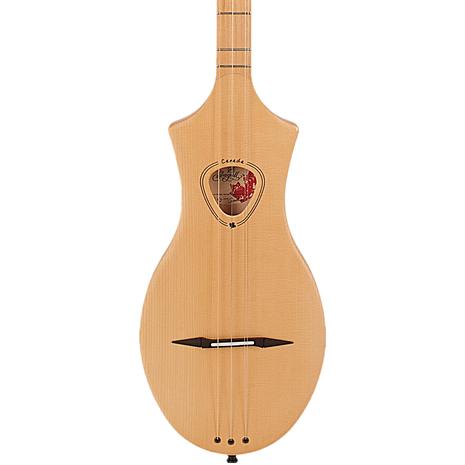
Acoustic World Instruments
MERLINSGSPRUCE_1_1