Meet the “Wilson Family”
Ann and Nancy Wilson (and their elder sister, Lynn) grew up in a close-knit family and an “army brat” lifestyle. The family patriarch, John Wilson, was a Marine Corps Major, which meant the family frequently relocated near whatever base he was assigned to. As youngsters, Ann and Nancy lived up and down the California coast and in locations as far away as Panama and Taiwan before finally settling in Seattle. Constantly uprooted, the girls struggled to maintain lasting friendships with locals or classmates. As a result, the sisters' bond grew exceptionally tight and centered on the family's love of music. Family matriarch Lois Wilson was a classically trained pianist and singer who filled the home with music. From an early age, she taught Ann and Nancy to harmonize and explore the musical arts at a time when girls were generally encouraged to pursue more “traditional” interests. When the “family band” wasn’t playing, Lois exposed her children to classical music, show tunes, rhythm and blues, jazz, folk, and experimental electronic music. A truly eclectic, progressive mix for a typical household in the late 50s and early 60s. It undoubtedly served as a crucial catalyst for the girl's future pioneering musical life.

Ann Wilson (Born June 19, 1950, in San Diego)
With parents who educated her and exposed her to music as both a listener and a participant, Ann dove in headlong, as an escape from her self-described “awkward youth.” Exacerbated by an ongoing struggle with her weight and a speech impediment, Ann became introverted outside of her family environment. Through her dedication and love of music, Ann discovered the confidence, strength, and musical voice that would make her a living legend.
Ann Wilson’s extraordinary voice is the instantly recognizable powerhouse behind five decades of hits. Her three-octave-plus (C3 to E6) range is considered well above average, yet it represents only a fraction of her vocal prowess. Ann’s voice is categorized as a “dramatic soprano.” A term generally reserved for operatic singers, who exhibit extraordinary power and projection, along with extreme endurance and control to support the most demanding, passionate performances. Ann’s work on songs like “Crazy on You” or “Alone” illustrates this flawlessly. When called for, she’s versatile and flexible enough to dial all that emotive power down to an intimate whisper. Above all, Ann's most remarkable quality is her ability to draw on her full strength and endurance across her entire range, from the lowest to the highest notes of her register.
Like so many of her contemporaries (although mostly male), Ann’s life direction and musical ambitions came into laser-sharp focus one cold Seattle night in February 1964. Ann was 14, and Nancy was only 10, when the Beatles made their American debut on The Ed Sullivan Show. Show tunes, old singalongs, and the piano gave way to the Beatles, rock folk, and the guitar. Eldest sister Lynn supported her younger sisters' ambitions by making collarless “Beatles” costumes for Ann and Nancy’s first band, “The Viewpoints,” in 1966.
After graduating from high school in 1968, Ann began performing in various bar bands around Seattle, sharpening her skills and paying her dues, when that powerhouse voice got her noticed. In 1971, Ann met her first serious love interest and future manager/producer, Mike Fisher, and his brother, the extraordinary guitarist Roger Fisher. While Nancy stayed in Seattle to finish school, Ann and the Fisher brothers moved to Vancouver and formed the earliest version of what would soon become “Heart.”

Nancy Wilson (born March 16th, 1954, in San Francisco)
As the youngest of the three Wilson sisters, Nancy shared the same nomadic lifestyle and musical environment as her older sisters. Nancy credits her parents and older sisters with sparking her musical interest, and their ever-changing lifestyle with preparing her for a life as a touring musician. Looking back on 50 years of sustained popularity through Heart and several high-profile film soundtracks, Nancy can add remarkable resilience to her list of qualities.
Nancy began her musical development by singing and learning to harmonize with her family. She has an enviable “lyrical” style voice with a warm, breathy mezzo-soprano range. Her natural blend with Ann is a notable part of Heart's sound, but she also shines as a lead vocalist. Indeed, Nancy sang lead on Heart's first #1 single, “These Dreams,” in 1985.
Remarkable voice and songwriting skills notwithstanding, Nancy Wilson is best known as a gifted guitarist and multi-instrumentalist, excelling at acoustic and electric guitar, mandolin, keyboards, and percussion. Nancy began her instrumental journey around age 10, after receiving a ¾-sized acoustic that she soon outgrew (in quality before size). Nancy soon adopted Ann’s more reliable full-sized flat-top as the sisters' paths diverged and their future roles began to take shape.
Nancy drew on an eclectic mix of acoustic guitar styles, from simple folk and traditional Travis-style fingerpicking to more complex flamenco, and even piano-inspired rhythm. Combined with inventive open-string use, uncommon voicings, and an aggressive rock edge. By 1974, when she was ready to rejoin Ann in Vancouver, Nancy had cultivated an unmistakable signature style. There was only one problem. Mixing acoustic and electric instruments with any degree of fidelity was only possible in the recording studio. At the time, preserving an acoustic guitar's or mandolin's natural sound on stage with a powerful rock band was nearly impossible. To overcome this problem, Nancy Wilson was among the first guitarists to adopt the cutting-edge active piezo pickup technology that would eventually replace magnetic-style acoustic pickups. This new tech, which Nancy championed, plus her uniquely developed style, helped define Heart's signature sound.
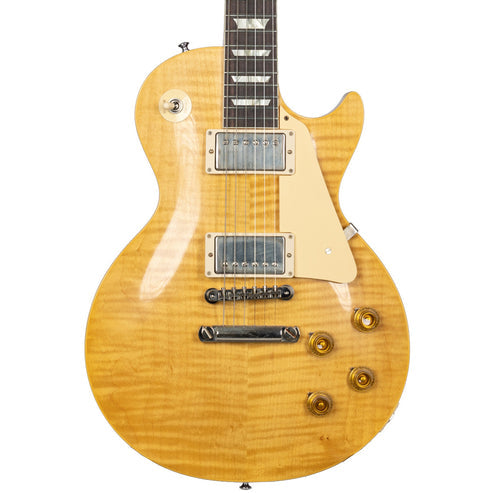
Because of her lifetime of outstanding contributions to acoustic guitar, C.F. Martin Guitars created the HD-35 Nancy Wilson signature acoustic model. For her contributions to the electric guitar, Nancy worked closely with Gibson on a new line of electric guitars. The result was the popular “Hawk” series, which included the Gibson Nighthawk signature model and the Epiphone Fanatic Nancy Wilson signature model.

“Heart Rises” 1975-1980
With Ann Wilson on lead vocals, Roger Fisher (lead guitar), Howard Leese (guitars/keys), Steve Fossen (bass), and Michael Derosier (drums), Heart’s superstar lineup was complete after Nancy Wilson (acoustic and electric guitar, and vocals) joined in 1974. Heart built a loyal, growing fanbase on the Vancouver club circuit while compiling and testing a strong collection of original songs by Ann and Nancy Wilson. Mike Fisher, Heart’s manager (and Ann’s romantic companion), arranged studio time with producer Mike Flicker to capture and “polish” the new material. The songs, performances, and Flicker's production were enough to secure a 2-album deal with the small Canadian label, Mushroom Records. This is where the “fun” begins.
In September of 1975, Mushroom Records released Heart's debut LP, “Dreamboat Annie,” in Canada, with the Ann Wilson-penned ballad "How Deep It Goes" as the lead single. It’s a well-written, well-performed song, but a horrible choice for the band's first single. Predictably, the single tanked, and “Dreamboat Annie” seemed headed for the cutout bin, but fate stepped in and gave the band's hard work a second chance. After a few high-profile gigs beyond the Vancouver club circuit, and with so many strong album tracks, “Dreamboat Annie” earned an American release in February 1976. This time, the band chose “Crazy on You” as the lead single. The upbeat, riff-heavy song showcased Ann's jaw-dropping vocals and became a top 40 hit. It stayed in heavy FM rotation when the band released the second single, “Magic Man,” which peaked at #7.
“Dreamboat Annie” became Heart's first in a consecutive string of top-selling albums throughout the 70s, including Magazine (platinum), Little Queen (3x platinum), Dog & Butterfly (2x platinum), and Bebe le Strange (gold). Massive hits and enduring hard rock staples, Heart's 70s arena-rock era includes Crazy On You & Magic Man (1976), Barracuda (1977), Straight On & Heartless (1978), Dog & Butterfly (1979), and Tell It Like It Is & Even It Up (1980).

Heart's “Comeback” and Ongoing Success
Looking back on Heart's massive career, it seems strange that historians call Heart's 1980s efforts their “Comeback” era, even though there was little pause between successful albums. However, it makes sense in a few ways. Problems and lawsuits with Heart's first label caused constant stress. Even more impactful was the end of Ann Wilson's professional and romantic relationship with manager Mike Fisher. At the same time, Ann Wilson ended her love affair and professional affiliation with Roger Fisher, Heart's “magic man” guitarist. Aside from Howard Leese, Heart entered the MTV age with a new band look and style, signed to the much larger, more hands-on Capitol Records.
The Wilson sisters' (and Heart's) sound and look evolved into a softer, more ballad-driven direction. What didn’t change was Heart's non-stop success. Top 40 hits came in machine-gun-like succession. With the new lineup and sound, Heart rolled along with This Man Is Mine (1982), How Can I Refuse (1983), What About Love? & Never (1985), These Dreams & Nothing At All (1986), Alone, Who Will You Run To & There's the Girl (1987). With no signs of slowing down, Heart entered their 3rd consecutive decade as hitmakers, with All I Wanna Do Is Make Love to You, I Didn't Want to Need You & Stranded (1990), and Will You Be There (In the Morning) (1993), and The Woman in Me (1994) —and this list excludes tracks that charted on Billboard “Mainstream Rock” without crossing over to the “Pop Top 40.”
In 1995, Nancy Wilson took a hiatus to start a family, while Heart maintained a presence through retrospective albums and sporadic acoustic duet performances, before returning to touring in 2002. Over the past 20-plus years, Heart's music has matured further and, at times, returned to heavier rock roots. 35 years after their arrival, Heart was back on the charts in the digital age with singles “Hey You" (reaching #26) and “WTF” (reaching #19), from the 2010 “Red Velvet Car” album, which reached #10. A milestone that makes Heart one of the few bands with Top-10 albums in 4 different decades.

Ann and Nancy Wilson's Legacy
Women have always been essential to music across cultures. However, even in the early 20th century, women's traditional musical roles were largely limited to performance. In the modern era, especially with the rise of the recording industry, women's roles, contributions, and opportunities have expanded greatly. Stylistic pioneers like Maybell Carter and Ella Fitzgerald, and exceptional songwriters like Dolly Parton, Carole King, and Nina Simone, became masters of style. Famous session player Carol Kay, and Anika Nilles are celebrated for mastery of their instruments. The list…is near endless. Without question, women have shaped the sound and direction of 20th-century music every bit as much as men. However, even as late as the 1970s, female electric guitarists and “all-girl” rock bands were rare in popular music and, unfortunately, treated as a novelty.
Ann Wilson noted the limited choices available to female pop performers: “When we started, you could either be a folk singer, disco diva, or you could be a secretary or maybe a disc jockey-there was no room for anything alternative.” Since their unprecedented rise to worldwide fame, Heart has toppled barriers, reset cultural expectations, and achieved sustained commercial and critical success that few artists ever approach. Since their 1975 debut, Heart has sold over 50 million albums worldwide (a milestone few reach) and scored 20 top-40 hits. A short list of industry accolades includes a Grammy and induction into the Rock ‘n Roll Hall of Fame in 2013. Perhaps most telling, many of Heart’s hits have become enduring classics and remain radio and streaming staples.
As highly creative songwriters, powerful performers, and band leaders, Ann and Nancy Wilson are rightly credited for pushing the music industry, and fandom accepts women as a serious force in rock music. However, focusing only on the Wilson sisters' gender and their role as trailblazing women in hard rock does them a disservice.
Simply put, Ann and Nancy Wilson are two of the most influential, defining forces in rock music, period.