L’Amour — Brooklyn’s Temple of Rock
If you grew up anywhere near New York City during the golden age of loud guitars and leather jackets, chances are you’ve heard the name L’Amour spoken with a kind of reverence. Located at 1546 62nd Street in Bay Ridge, Brooklyn, this unassuming corner club became one of the most influential venues in the city’s music history — a place where legends were born, road-tested, and sometimes destroyed in glorious fashion.

Metallica at L’Amour in January 1985. Photo credit Alex Kayne.
From Disco Dreams to Headbanger Heaven
Believe it or not, L’Amour didn’t start out as a metal stronghold. When it opened in 1978, founders Mike and George Parente envisioned a disco and dance club, perfectly in tune with late-’70s Brooklyn nightlife. But as the decade turned and the city’s pulse shifted, so did L’Amour’s identity. Rock was rising, and local demand for heavier sounds became impossible to ignore.
By the early 1980s, the Parente brothers shifted gears — swapping mirror balls for Marshall stacks — and in doing so, created something iconic. L’Amour became “The Rock Capital of Brooklyn,” drawing fans from all five boroughs and far beyond.

Slayer at L’Amour in 1985 - Credit: Michele Suchomel
The Birthplace of East Coast Metal
For young New York musicians, L’Amour was the proving ground. It wasn’t just a club — it was the club. Bands like Twisted Sister, Anthrax, Overkill, Type O Negative, and White Lion all tore up its stage long before they became MTV staples. On any given night, you might catch an unsigned local act sharing the bill with touring giants like Metallica, Slayer, Iron Maiden, or Motörhead.
What made it special wasn’t only the lineup — it was the atmosphere. There was a gritty Brooklyn magic in the air: the smell of stale beer, the hum of tube amps, the roar of 1,500 fans packed shoulder-to-shoulder. Everyone from the bouncers to the bartenders understood one thing — the music came first.

More Than Metal: A Crossroads of NYC Music
While metal defined its legend, L’Amour’s story also reflects New York’s broader musical evolution. The venue bridged eras — from the glam and hard rock of the ’80s to the grunge and alternative wave of the early ’90s. Bands like Soundgarden, Nine Inch Nails, and Faith No More all passed through its doors, proof of how adaptable the club could be while staying true to its core.
It was also a place where fans found community. For every mosh pit and headbanging session, there were friendships formed, local bands launched, and lifelong memories made. L’Amour wasn’t just a stage — it was a cultural hub for working-class New York musicians and fans, representing the city’s defiant, do-it-yourself spirit.

The Curtain Falls — But the Echo Remains
By the early 2000s, times had changed. Local clubs struggled under rising costs, shifting tastes, and the digital music boom. L’Amour closed its doors in 2004, marking the end of an era. But its influence didn’t fade. Countless modern venues — from St. Vitus in Greenpoint to The Bowery Ballroom in Manhattan — owe a spiritual debt to the groundwork laid by Brooklyn’s original rock temple.
In many ways, L’Amour’s story mirrors New York’s own: constantly reinventing itself, fiercely independent, and impossible to forget.

Why It Still Matters
For Alto Music — a company built on the same passion that fueled places like L’Amour — remembering these venues isn’t just nostalgia. It’s honoring the lifeblood of the scene. Every amp sold, every guitar strummed, every band that gets its start in a basement or a bar — all of it traces back to spaces like this.
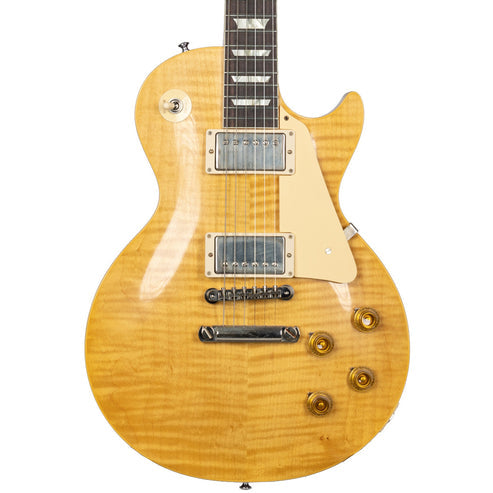
So next time you plug in your Les Paul, crank that amp, and feel the floor shake beneath you, think of L’Amour — the Brooklyn club that turned raw sound into history.