


- Details
- Features
- Reviews
This pedal faithfully recreates a 70s-style effect, preserving all the distinctive naws that made the original unique. Unlike a modern fully digital echo effect, where the delayed repeats are exact copies of the input signal and can be intentionally altered with filters or other processing, in a true magnetic-tape machine certain results are inherent to the electronic and mechanical operation of the apparatus and cannot be removed. And although some of these aspects could be attributed to the structural limitations of certain units, their impact on the sound is precisely what makes these machines unique, recognizable, desirable, and ultimately musical and pleasing.
For example, hiss is an integral part of any sound recorded to and played back from magnetic tape, and despite all efforts in tape quality and in the design of the record/playback circuitry, in a tape-echo machine, where the tape is only a few centimeters long and runs in a continuous loop, its deterioration is naturally rapid and unavoidable, making certain defects more evident than in standard reel-to-reel recorders. Other factors that significantly affect the final sound include the frequency response of both the tape and the circuitry, which can never be perfectly flat. Another aspect, not always obvious but important, is the change in bandwidth as tape speed varies: the faster the tape runs, the shorter the delay time and the clearer the sound, but hiss becomes more noticeable and the output level may increase slightly; conversely, lower speeds produce longer delay times but a darker tone, less noticeable hiss, slightly lower output level, and reduced definition. If a musician seeks the sound of a tape-echo effect, they are seeking the full experience, imperfections included.
However, in the virtual environment offered by digital audio and simulation, it is possible to reduce or even eliminate certain undesirable artifacts, at the expense of absolute realism. This effect can easily reach a state of self-oscillation and it can distort the sound in a transistor-fashioned way.
When the splice of the tape passes around the capstan, it slips or jumps and sometimes it can cause unintended erasure of part of the echo tail. The tape speed is not truly stable and this creates the «wow & flutter» effect: slight fluctuations in the tape speed introducing micro-variations in the delay time, which translate into corresponding pitch shifts in the repeated sound, creating the lively, organic character typical of tape echoes. One aspect of the original effect is particularly relevant: the erase head cannot completely clear the tape when the recorded signal reaches saturation. A highly saturated sound that is not fully erased may leave a residual trace on the next pass. This secondary echo can occur approximately 15—20 seconds later, depending on the motor speed.
| Product Name | Crumar COSMIC ECHO - Tape Echo Simulator Pedal |
|---|---|
| Brand | Crumar |
| Condition | New |
| MPN | ECH-CRUMAR |
| UPC | 0733968837356 |
| Shipping Option | Free Shipping on orders over $94.72 |
What's in the Box?
- Crumar COSMIC ECHO - Tape Echo Simulator Pedal
- PSU
- Tape inspired delay pedal
- Emulates classic Space-Echo units of the 1970s
- Detailed recreation of tape saturation and modulation character
- 3x independent delay line "tape heads" for short, medium, long, and combined rhythmic repeats
- Dedicated Bass / Treble EQ controls for delay path
- Fully analog dry path
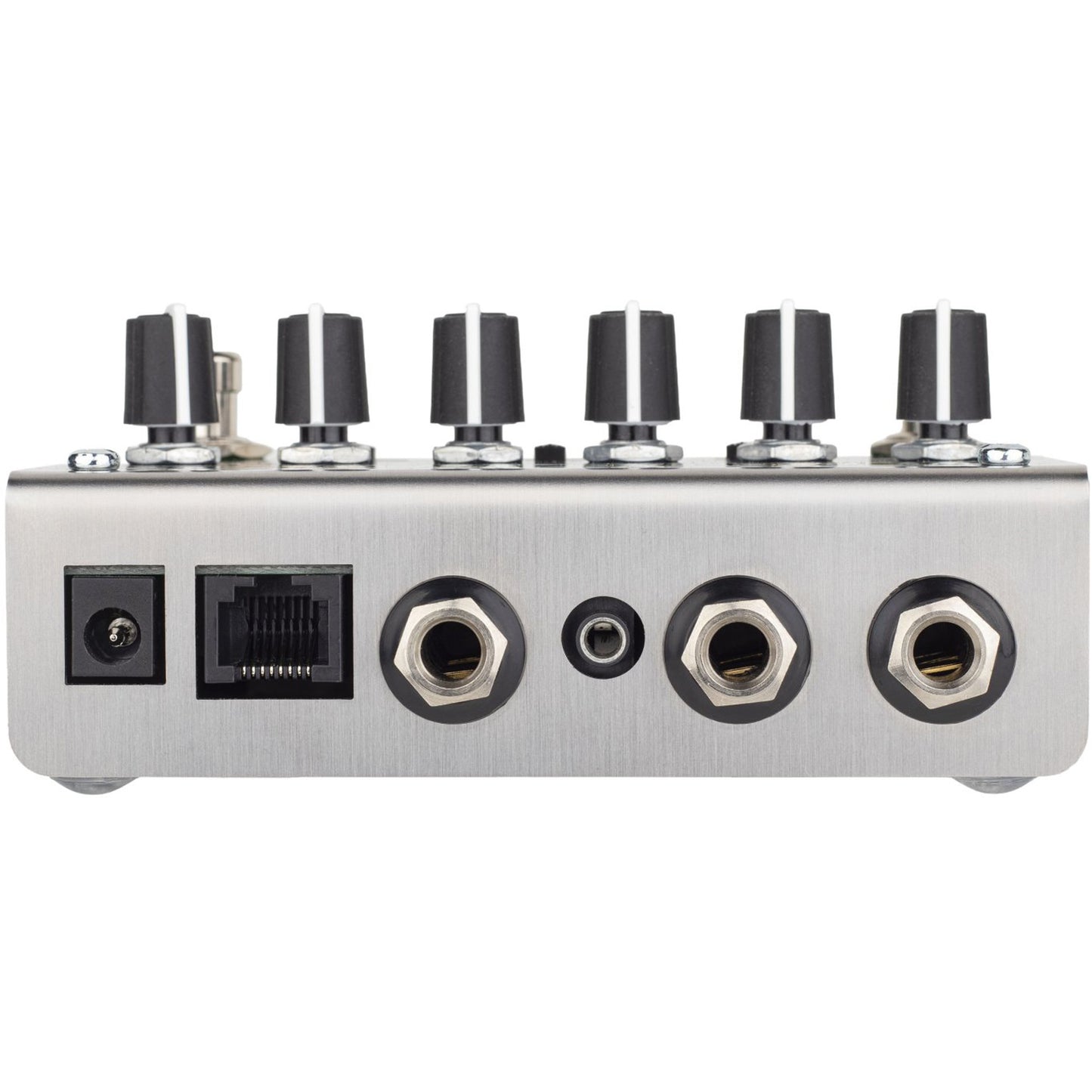
- Independent echo-only and dry/wet outputs
- Tap tempo footswitch
- Connects to Crumar One-Cord or via standard 1/4" input
- Built-in spring reverb emulation
This pedal faithfully recreates a 70s-style effect, preserving all the distinctive naws that made the original unique. Unlike a modern fully digital echo effect, where the delayed repeats are exact copies of the input signal and can be intentionally altered with filters or other processing, in a true magnetic-tape machine certain results are inherent to the electronic and mechanical operation of the apparatus and cannot be removed. And although some of these aspects could be attributed to the structural limitations of certain units, their impact on the sound is precisely what makes these machines unique, recognizable, desirable, and ultimately musical and pleasing.
For example, hiss is an integral part of any sound recorded to and played back from magnetic tape, and despite all efforts in tape quality and in the design of the record/playback circuitry, in a tape-echo machine, where the tape is only a few centimeters long and runs in a continuous loop, its deterioration is naturally rapid and unavoidable, making certain defects more evident than in standard reel-to-reel recorders. Other factors that significantly affect the final sound include the frequency response of both the tape and the circuitry, which can never be perfectly flat. Another aspect, not always obvious but important, is the change in bandwidth as tape speed varies: the faster the tape runs, the shorter the delay time and the clearer the sound, but hiss becomes more noticeable and the output level may increase slightly; conversely, lower speeds produce longer delay times but a darker tone, less noticeable hiss, slightly lower output level, and reduced definition. If a musician seeks the sound of a tape-echo effect, they are seeking the full experience, imperfections included.
However, in the virtual environment offered by digital audio and simulation, it is possible to reduce or even eliminate certain undesirable artifacts, at the expense of absolute realism. This effect can easily reach a state of self-oscillation and it can distort the sound in a transistor-fashioned way.
When the splice of the tape passes around the capstan, it slips or jumps and sometimes it can cause unintended erasure of part of the echo tail. The tape speed is not truly stable and this creates the «wow & flutter» effect: slight fluctuations in the tape speed introducing micro-variations in the delay time, which translate into corresponding pitch shifts in the repeated sound, creating the lively, organic character typical of tape echoes. One aspect of the original effect is particularly relevant: the erase head cannot completely clear the tape when the recorded signal reaches saturation. A highly saturated sound that is not fully erased may leave a residual trace on the next pass. This secondary echo can occur approximately 15—20 seconds later, depending on the motor speed.
| Product Name | Crumar COSMIC ECHO - Tape Echo Simulator Pedal |
|---|---|
| Brand | Crumar |
| Condition | New |
| MPN | ECH-CRUMAR |
| UPC | 0733968837356 |
What's in the Box?
- Crumar COSMIC ECHO - Tape Echo Simulator Pedal
- PSU
- Tape inspired delay pedal
- Emulates classic Space-Echo units of the 1970s
- Detailed recreation of tape saturation and modulation character
- 3x independent delay line "tape heads" for short, medium, long, and combined rhythmic repeats
- Dedicated Bass / Treble EQ controls for delay path
- Fully analog dry path
- Independent echo-only and dry/wet outputs
- Tap tempo footswitch
- Connects to Crumar One-Cord or via standard 1/4" input
- Built-in spring reverb emulation
- Choosing a selection results in a full page refresh.
- Opens in a new window.